EU-LIFE blog: How EU-LIFE Connects Science connected my science
By Hongchang Fu, Postdoctoral project research scientist in the Samra Turajlić Group at the Francis Crick Institute (United Kingdom).
Science is strongest when it is connected
Some collaborations begin with a meeting. Others first grow through screens, shared data, and cross-border conversations. My collaboration with Dr Daniela Thommen and her team at the Netherlands Cancer Institute (NKI) initially falls into the latter category.
For the past five years, our groups at University College London and The Francis Crick Institute have worked closely with Daniela’s team on the patient-derived tumour fragments (PDTFs) to investigate the immunotherapy responses. Scientifically, the connection was continuous. We exchanged ideas, discussed data, joined online meetings, and kept the collaboration moving forward. Yet, because of the pandemic, an in-person exchange we had hoped for from the early stages of my PhD was never fully realised. In a way, we were physically disconnected, but never scientifically. We were remote, but never distant.
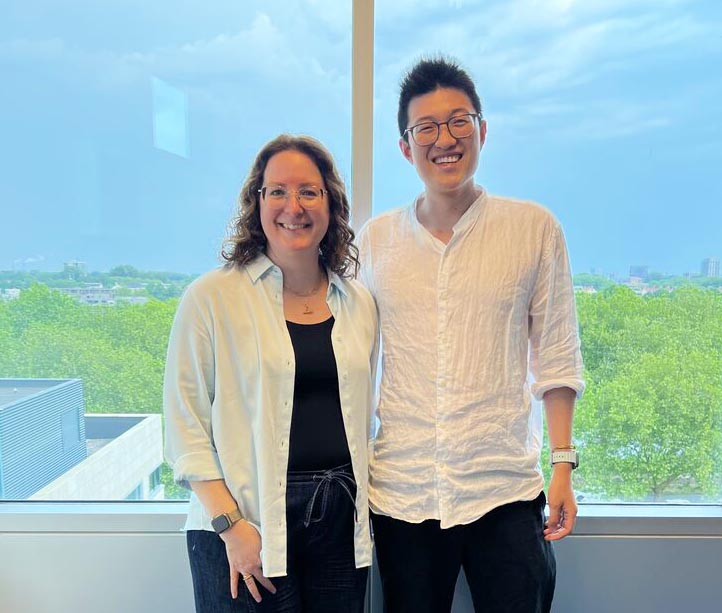
From the beginning of my PhD, I have been passionate about academic exchange. I have always believed that science advances not only through experiments and publications, but also through conversations among people, teams and institutes. These exchanges allow us to view our own research from another perspective, learn different ways of working, and build trust that sustains long-term collaboration. This is why EU-LIFE Connects Science came at exactly the right moment. As the name suggests, the programme created a space to “connect”. It offered the chance to finally visit NKI in person, meet Daniela and her team face-to-face, and expand a collaboration that had already grown over several years, mostly at a distance. What had previously taken place through online meetings could now happen through direct discussion, shared time at the institute, and informal conversations that are often difficult to recreate virtually.
Academic exchange as pollination
During the experience-sharing session, I described academic exchange through the metaphor of “pollination”. The ideas, techniques, and perspectives we carry as participants may sometimes seem small or even go unnoticed by us. Yet, like pollen carried by bees, they may become valuable to other institutes, just as their own unique strengths and insights can be equally enriching to us. Through this mutual exchange, new ideas can take root, grow and eventually bear fruit as scientific outputs.
This visit made that metaphor feel very real. I had the opportunity to share the vision and organisation of our nationwide research platform, Multiomic Analysis of Immunotherapy Features Evidencing Success and Toxicity (MANIFEST), including how we bring together clinical samples, multiomic data and collaborative expertise to better understand immunotherapy response and toxicity. In return, discussions with Daniela’s team helped me reflect on how PDTF-based approaches can be further developed to investigate treatment response in a more functional and clinically relevant way.
These conversations were not only about comparing techniques. They were about understanding the reasoning behind different experimental systems and platforms: how samples are handled, how assays are designed, how readouts are interpreted, and how each model can be used to answer a specific biological or clinical question. This kind of exchange is difficult to capture in a protocol or a publication. It happens most naturally when scientists sit together, look at data, ask questions and challenge each other’s assumptions.
Five days, but much more than a visit
Although the programme lasted five days, the experience felt much broader than a one-week visit. It created time not only for scientific discussion, but also for observing how another institute works in practice: how teams interact, how facilities support research, how collaborative projects are organised, and how institutional infrastructure can shape the science that becomes possible.
The programme also created connections beyond individual research groups. Through EU-LIFE, early-career researchers, technical staff and senior members from different institutes were brought together in the same space. This made it possible to discuss not only science, but also how institutes across Europe approach research strategy, collaboration, funding, training and institutional development. These conversations are valuable because every institute works within its own national and organisational context, yet many of the challenges we face are shared.
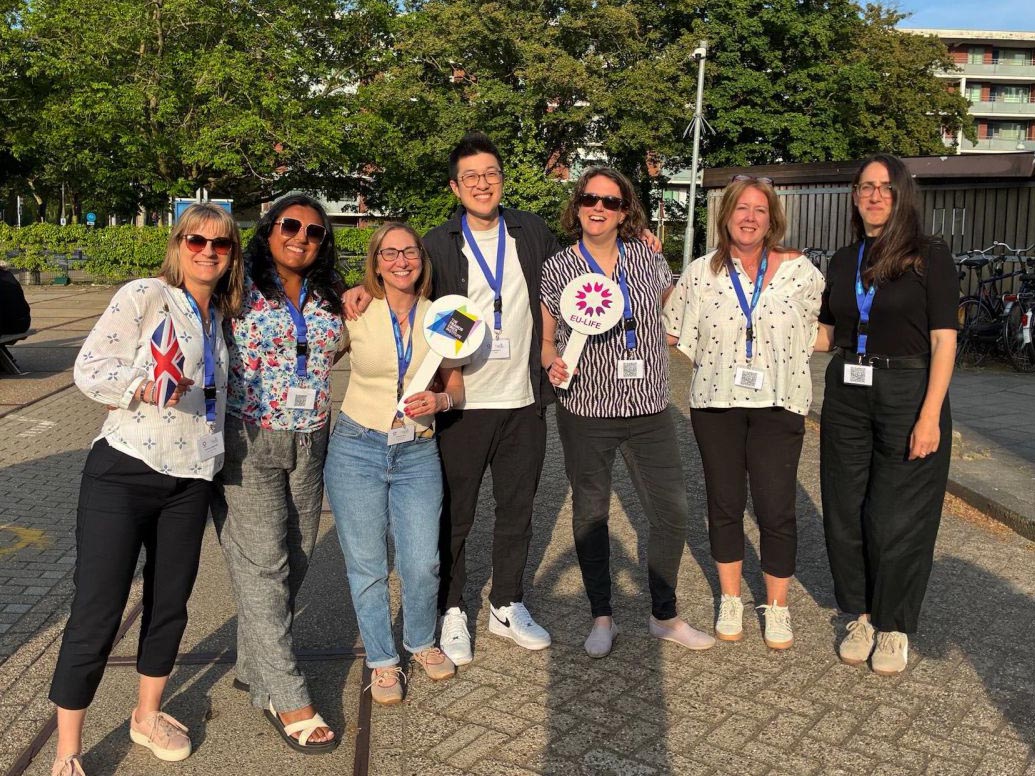
Looking back, EU-LIFE Connects Science was more than a visit. It was the continuation of a collaboration, the recovery of an opportunity delayed by the pandemic, and a reminder of why in-person academic exchange still matters. After years of being remote but never distant, the programme helped bring us back together, not only as collaborators, but as members of a wider European research community.
In that sense, EU-LIFE did exactly what its name promises: it connected science, people and institutes across borders.