EU-LIFE blog: Science is Wonderful! – More than outreach, a platform for research and policy dialogue
By Marko Košiček, science communication coordinator at the Ruđer Bošković Institute (RBI), EU-LIFE main representative of RBI, and member of the EU-LIFE Science Communication Working Group.
From my early days as a chemistry undergraduate, I discovered my passion for science communication. Over the years, this took many forms: interactive talks, public debates, workshops, hands-on activities, and even games. The settings were just as varied – lecture halls, classrooms, festivals, and improvised spaces. The audience could be hundreds, or just one person. But the principle never changed: focus on the audience and share my amazement at how nature works.
That principle stayed with me as my career evolved. Transitioning from researcher to science communicator at Ruđer Bošković Institute, Croatia’s largest research institute, opened a new chapter, one where I was no longer the only storyteller. Instead, I began working alongside researchers, helping them translate their work into experiences that resonate beyond academia. Together, we built a culture of communication that is now widely recognised in Croatia.
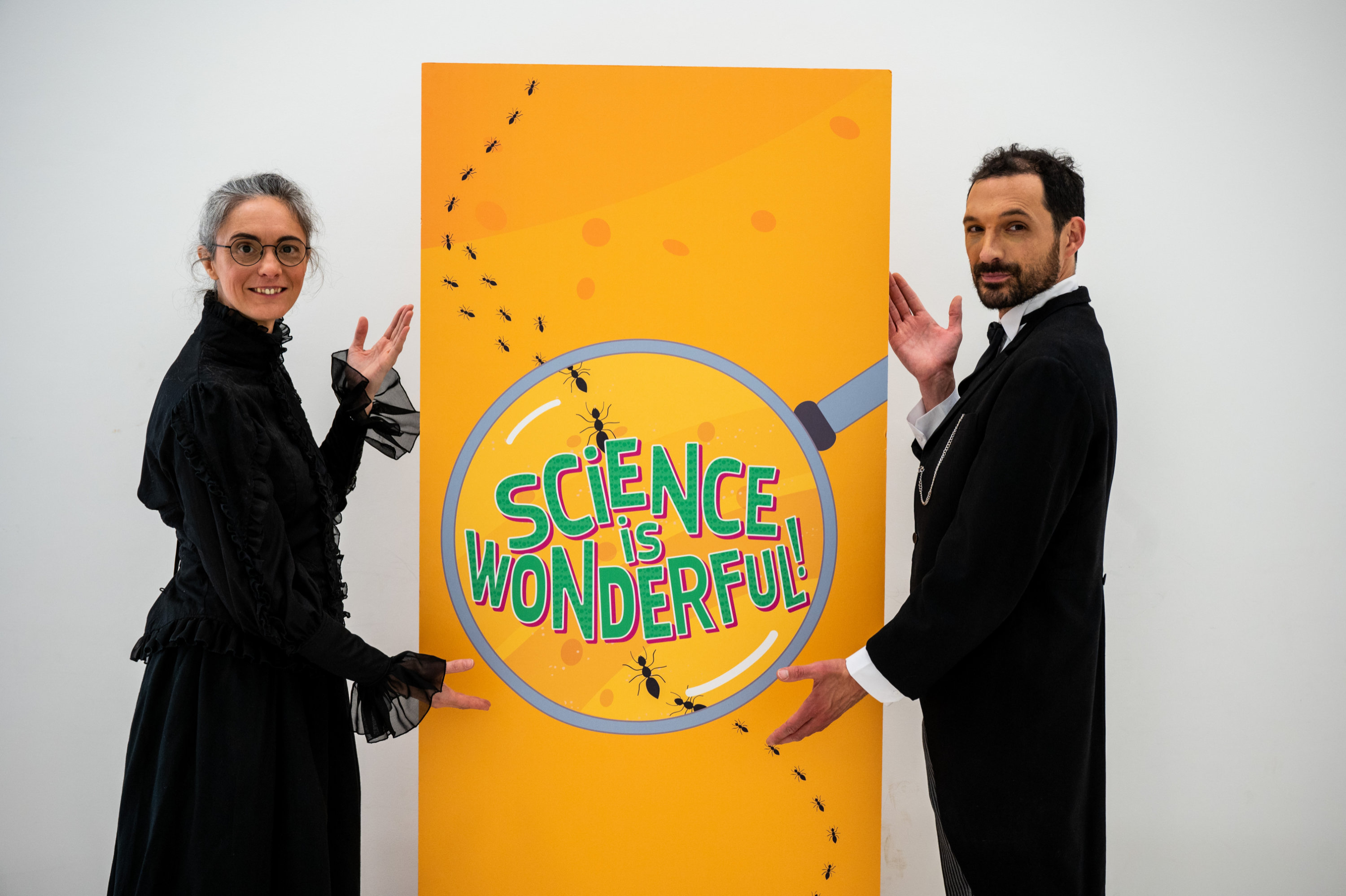
Then came Science is Wonderful!
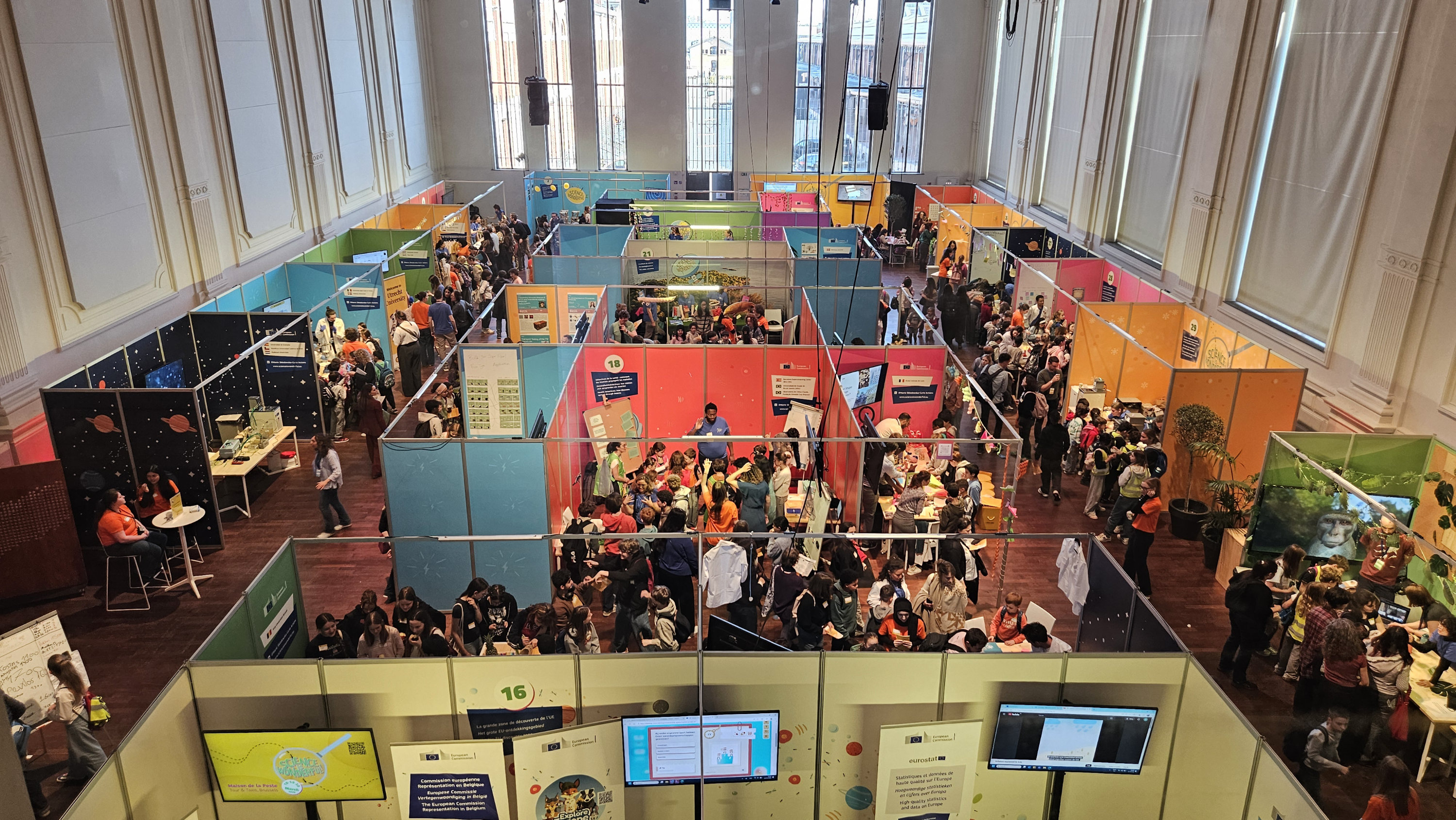
At first glance, it seems like many other outreach events: a large-scale science fair, thousands of pupils, interactive stands, enthusiastic explanations. Indeed, every year, more than 4,000 young visitors walk through the event, encountering research funded by European programmes such as the Marie Skłodowska-Curie Actions (MSCA) and the European Research Council (ERC). Since its launch in 2015, the initiative has aimed to bring cutting-edge science closer to schools and inspire future careers.
But after participating for two consecutive years, I realised something unexpected: the audience is no longer the only reason to be there. For our team, being selected for Science is Wonderful! was both recognition and opportunity – recognition of the long-term effort invested in supporting researchers and advancing science communication, and an opportunity to engage in a different kind of exchange – not only with pupils, but with fellow researchers from across Europe.
Two years, two groups of insects and an unexpected journey
“Marko is slowly becoming an entomologist!”, that was a comment on one of our LinkedIn posts. How does someone trained in chemistry, with a PhD in biochemistry and a research background in neuroscience, end up working with ants one year and beetles the next?
The story begins in 2022, when I saw a call for Science is Wonderful! classroom activities. The idea was simple: connect MSCA researchers with schools to co-create educational materials that could travel across Europe. I helped match one of our MSCA grantees with a local school, and together we developed an activity. We were not selected.
Two years later, in 2024, a new call appeared, this time for ERC grantees. Jelena Bujan was just about to start her ERC project, and we had already collaborated on outreach activities. Applying felt like a natural step. We prepared the proposal carefully, and eventually we were accepted [see BOX 1].
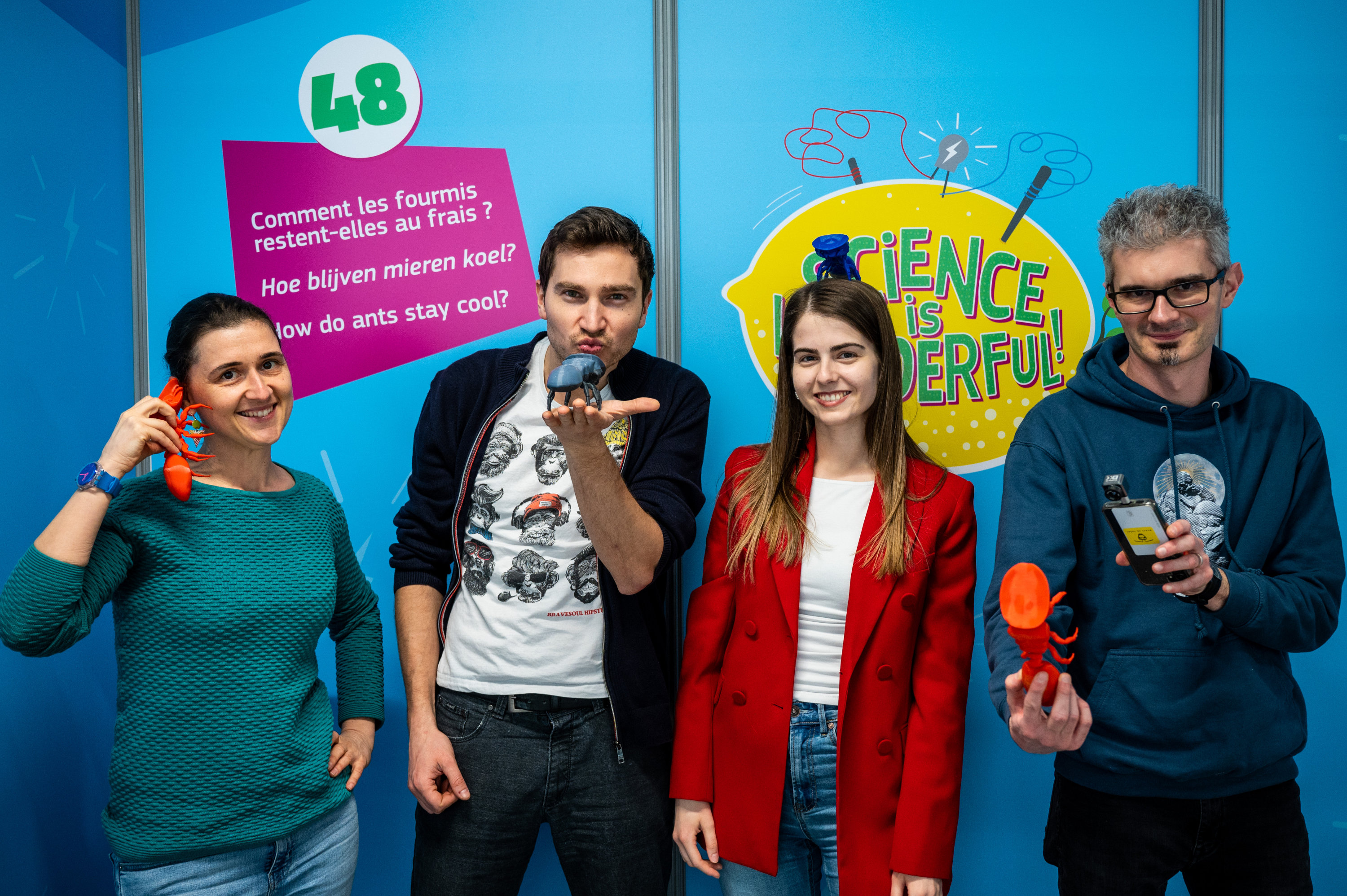
That experience changed our perspective and reinforced our ambition to internationalise our science communication efforts through the Ruđer Fermentor programme, which we were developing in parallel and expanding through Horizon projects and collaborations initiated at the Zagreb Science Communication Forum. So, when the next opportunity arose, we were ready.
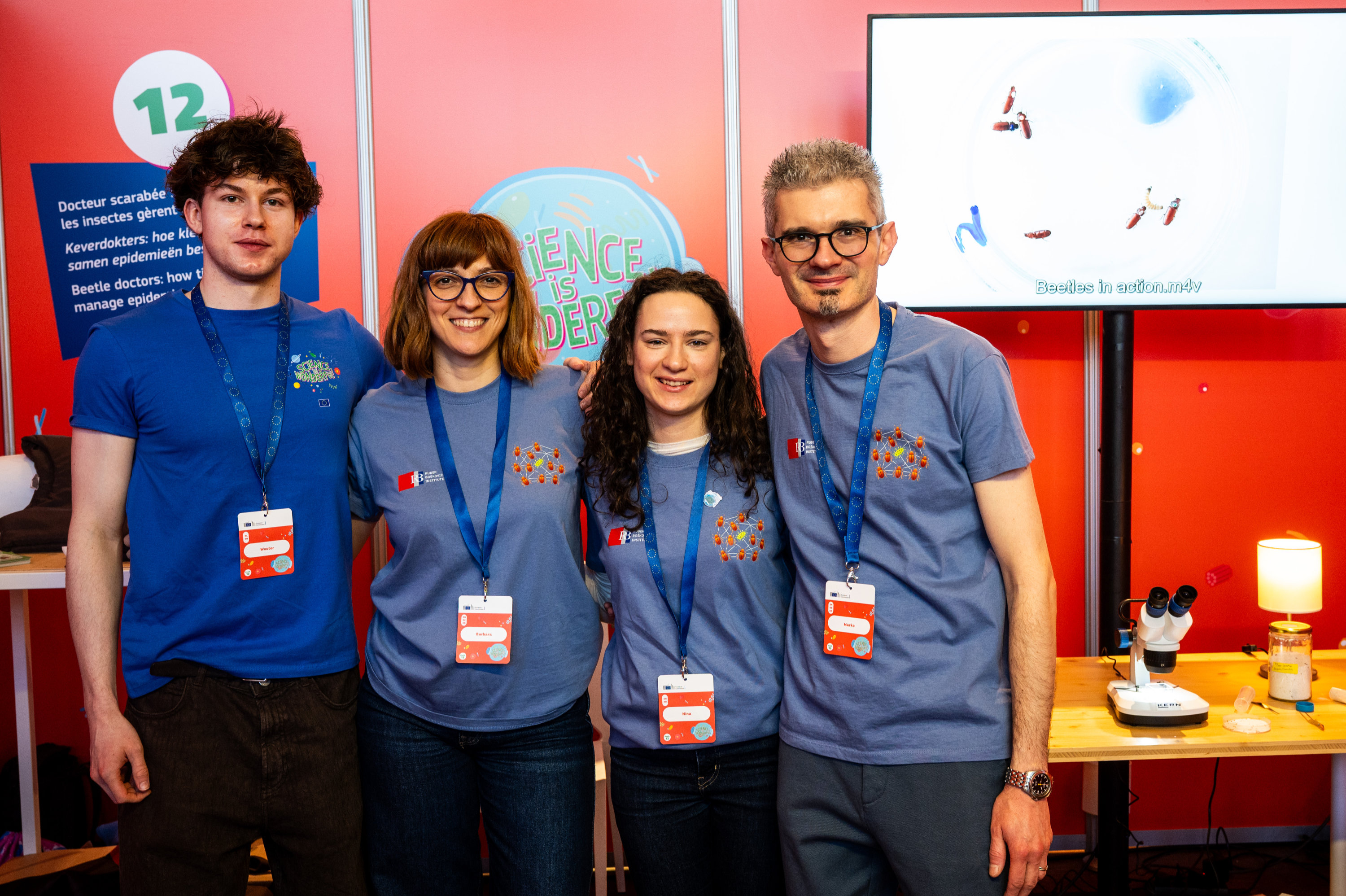
This time, it was Barbara Milutinović, nearing the completion of her MSCA project, who agreed to join. Her research brought a new organism to our focus – that is how beetles entered my life [see BOX 2].
The policy dimension – when storytelling meets decision-making
I did not expect that explaining ants on a carpet would turn into a conversation about research policy. Yet that is exactly what happened. I spent hours sitting on the anthill carpet, surrounded by 3D-printed ants and custom-made plush beetles. Each of these objects carried a piece of real research. The carpet became a colony. The beetles came to life through costumes and movement. Fungal infections became something you could see, follow, and understand. Around us were microscopes and thermal cameras, the same tools used in the lab, quietly reminding everyone that this playfulness was grounded in rigorous science.
At some point, the audience shifted. Among the visitors were policymakers and high-level representatives from Brussels, including Ekaterina Zaharieva, European Commissioner for Startups, Research and Innovation. The dynamic changed, but the message did not. Whether you are speaking to a child or a commissioner, the core challenge remains the same: making research understandable without simplifying it beyond recognition.
We were not just presenting ants and beetles; we were advocating for curiosity-driven, fundamental research. The kind of research that does not promise immediate applications and often struggles to justify itself in a world focused on rapid results.
In that sense, a plush beetle can sometimes do what a policy brief cannot – it can open the door. That is why visibility matters, not as self-promotion, but as a responsibility. If we want fundamental research to be supported, we cannot afford to remain quiet or invisible.
We need to show up. We need to engage. And yes, we need to be louder. Especially at the European level, where networks like EU-LIFE have both the credibility and the reach to make a difference. Because the conversation about the future of research is already happening. The question is: are we in the room?
|
BOX 1 When Marko suggested to join Science is Wonderful! (SiW), I expected it to be just another outreach event, only at a larger scale. Having done a lot of outreach across Croatia, I thought I knew what awaited us in Brussels. I was wrong. This was not just outreach. Unlike other events we attended, we were given the freedom to design our own booth, and with the support of the wonderful organising team, all our wishes came true. In collaboration with an artist we transformed our booth into an ant colony. This approach grabbed attention, invited people to come closer, and engage with us and the ants to find out what we do. What stood out to me was how curiosity transcended language barriers. One of the most memorable moments was watching kids translate our stories from English into Flemish or French so their friends could understand. The same happened with adults, which was a great reminder that curiosity is universal, we just need to awaken it. Beyond public engagement, SiW was a window into top European research across scientific fields. As scientists, we are often focused on our own work, and we interact with scientists in our own network-bubble. SiW allows people from different fields to come together, learn from each other, and enjoy each other’s creativity. In today’s world of uncertainty, I believe science communication is essential. As public trust in scientists declines, our role as scientists is to make our work visible, relatable, and to clearly convey its importance. We can do this by putting faces to our projects and stories to our research, which is why events such as SiW are so important. SiW is a stage that helps us rebuild public trust. Insect populations are declining across the globe, and yet many people’s initial response when faced with an insect is “ewww…”. Changing this perception starts with experience. The kids were excited to hold the ants, surprised by how light they are, and how much they tickle. Overcoming fear is the first step towards understanding and from understanding we can progress to care and protect. This is why SiW matters. |
|
BOX 2 Attending the Science is Wonderful! fair was a truly valuable experience for me. While I am already familiar with outreach activities, this event offered much more than public engagement alone. It provided an excellent opportunity to expand my professional network and connect with people I would not typically meet in my day-to-day work. These interactions are important, not only for exchanging ideas, but also for building collaborations that can positively shape my career in the long term. Science communication is something I consider an essential responsibility of every scientist. The time when scientists could remain distant and misunderstood by the public is no longer sustainable. Today, we are faced with an overwhelming amount of misinformation, including misleading or false scientific claims that are easily accessible and widely shared. This creates confusion and erodes trust in science, as people often struggle to distinguish credible information from unreliable sources. For this reason, it is increasingly important that scientists actively engage in communicating their work. By making science more accessible and understandable, we can help bridge the gap between research and society, counter misinformation, and reinforce public trust. Initiatives like Science is Wonderful! play a crucial role in this effort, bringing science closer to people and demonstrating its relevance in everyday life. |